Marmotest CarraraASTM Organizational Member
Uso della pietra · Approfondimenti

Scelta e impiego della pietra naturale

Le proprietà fisiche e meccaniche aiutano a valutare una pietra per l’impiego previsto. Qui trovi una spiegazione essenziale di ciascuna caratteristica; le tabelle si aprono senza lasciare la pagina.

Come leggere i valori. Gli intervalli riferiti alle famiglie di pietra orientano il confronto, ma non sono limiti universali di idoneità. Per scegliere una fornitura servono risultati rappresentativi della pietra proposta e una valutazione delle condizioni di posa e d’esercizio. Riferimento: CEN/TR 17024.

Acqua e struttura della pietra

EN 1936

Massa volumica apparente

Esprime la massa per unità di volume, compresi i pori. È utile per stimare il peso degli elementi e per confrontare materiali, ma da sola non ne stabilisce l’idoneità a un impiego.

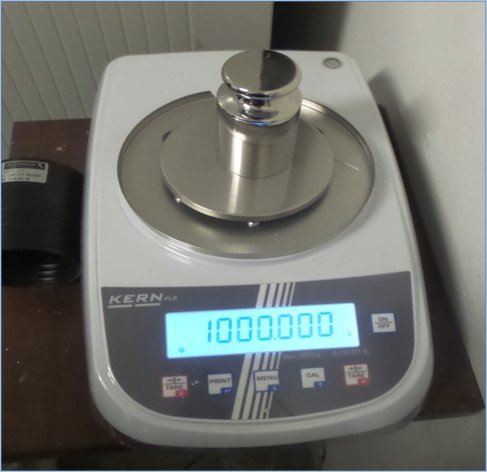
Bilancia Kern del laboratorio Marmotest con massa campione
Bilancia Marmotest con risoluzione di 0,001 g, tarata annualmente da un laboratorio accreditato.
EN 1936

Porosità aperta

Indica la quota di pori comunicanti con l’esterno. Aiuta a interpretare il comportamento della pietra quando entra in contatto con acqua e agenti esterni.

EN 13755

Assorbimento d’acqua

Misura quanta acqua la pietra può assorbire rispetto alla massa secca. Va considerato insieme a porosità, finitura, esposizione e condizioni di posa.

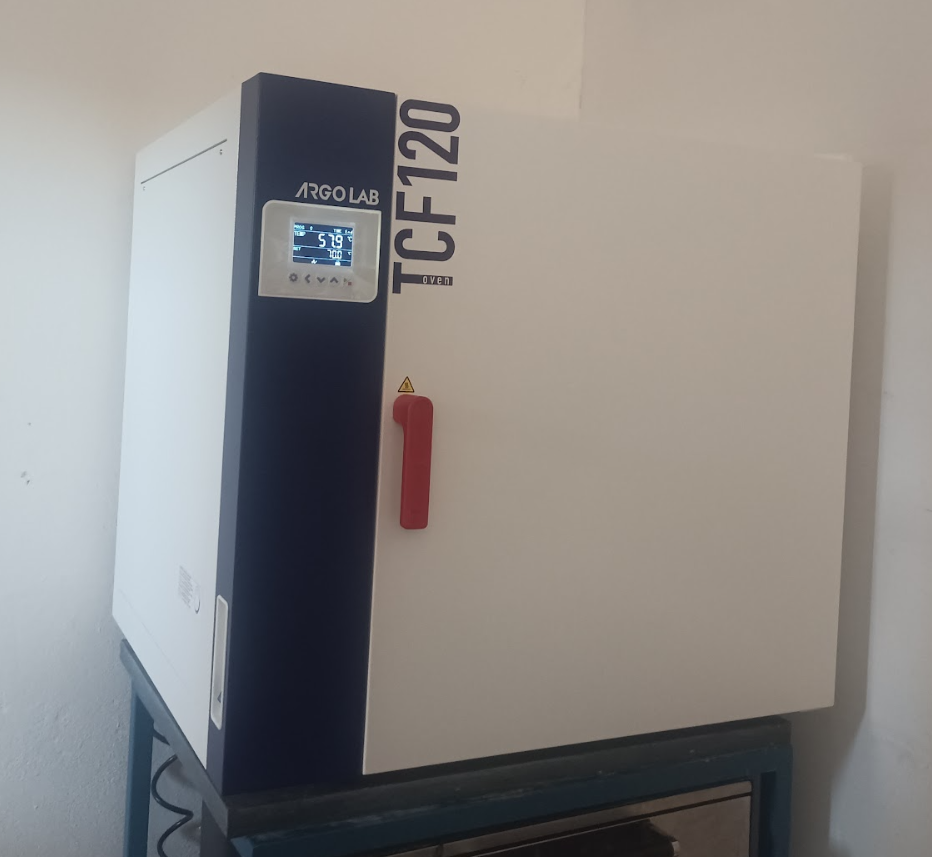
Forno da laboratorio Argolab CF120 di Marmotest
Forno Marmotest: essiccazione dei provini prima della determinazione dell’assorbimento d’acqua.

Uso, usura e sicurezza

EN 14158

Resistenza all’urto

Valuta la risposta a un impatto. È particolarmente utile per pavimentazioni ed elementi soggetti a urti durante l’uso.

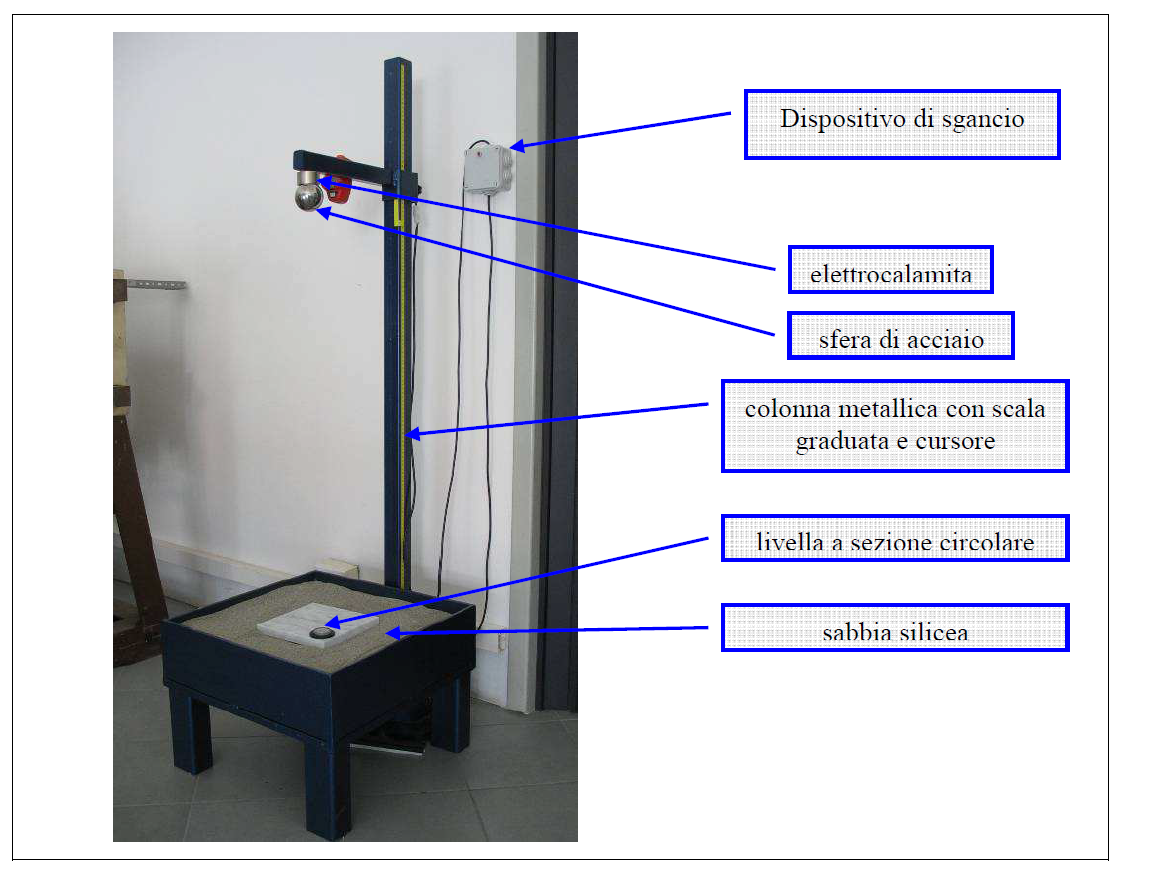
Attrezzatura Marmotest per la prova di resistenza all’urto con sfera d’acciaio e dispositivo di sgancio
Attrezzatura Marmotest per la prova di resistenza all’urto.
EN 14231

Resistenza allo scivolamento

La finitura e la presenza d’acqua incidono sulla sicurezza al passaggio. Il risultato della prova va riferito alle effettive condizioni d’uso.

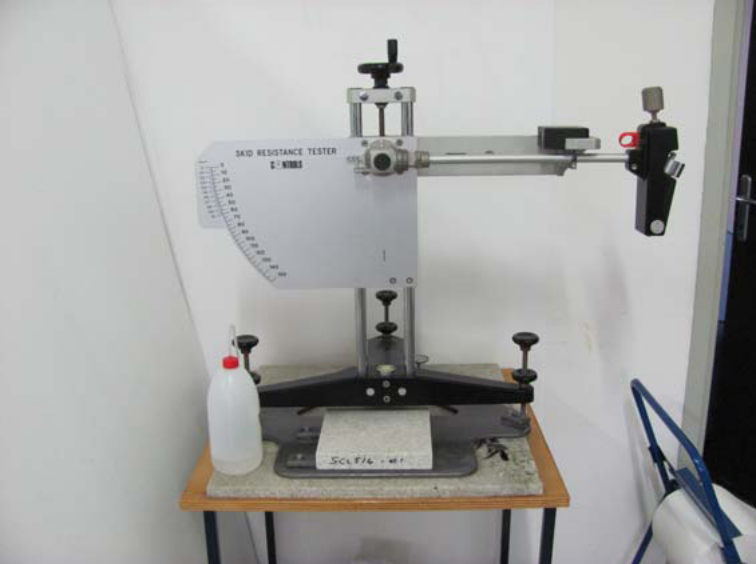
Pendolo per la prova di resistenza allo scivolamento del laboratorio Marmotest
Pendolo Marmotest per la prova di resistenza allo scivolamento.
UNI EN 14157

TEST CAPON

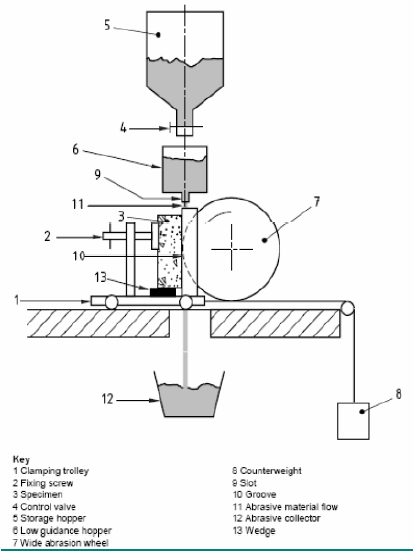
Wide wheel abrasion test. The wear is determined as the width of the groove in the specimen, expressed in mm. A lower value indicates higher abrasion resistance.

Wide wheel abrasion machine diagram
Wide wheel abrasion machine. Image from MarmoTest, Abrasion Value: A Reference Guide.
ASTM C1353/C1353M

TEST TABER

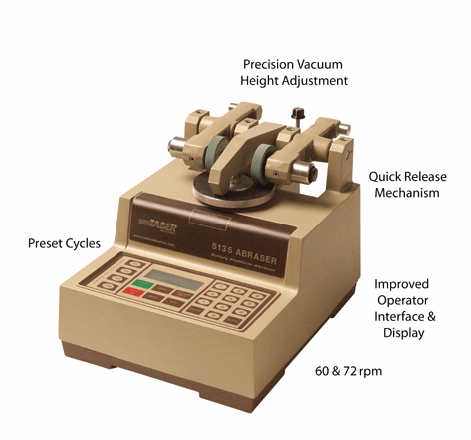
Rotary platform abraser. The Taber abrasion index is used to compare abrasion resistance; a higher index indicates higher resistance. It is not directly comparable with Capon results in mm.

Taber rotary platform abraser
Taber abraser. Image from MarmoTest, Abrasion Value: A Reference Guide.

Esposizione esterna

EN 12371

Resistenza al gelo

Per gli elementi esposti all’esterno si valuta la risposta ai cicli di gelo e disgelo, considerando anche la configurazione dell’opera.

Ambienti con acqua
La scelta per piscine, vasche, docce e altri ambienti con presenza continuativa d’acqua richiede una valutazione dedicata. Approfondimento separato sulla UNI/TS 11881.
EN 1936

Massa volumica apparente

Fonte dei valori: tabella del documento CEN/TR 17024 fornito da Marmotest.

Apparent density
kg/m³
(EN 1936)
Compact Limestone>2 500
Other Limestone<2 500
Sandstone1900 to 2700
Slate – Shale – Schist2600 to 3000
Marble2600 to 2900
Gneiss2400 to 2700
Granite2400 to 3000
Basalt2550 to 3000

Valori di orientamento: verificare le caratteristiche della pietra specifica e le condizioni di impiego.

EN 1936

Porosità aperta

Fonte dei valori: tabella del documento CEN/TR 17024 fornito da Marmotest.

Open porosity
vol.%
(EN 1936)
Compact Limestone0,3 to 2
Other Limestone2 to 48
Sandstone0,4 to 25
Slate – Shale – Schist0,1 to 6
Marble0,1 to 2
Gneiss0,1 to 2
Granite0,1 to 2
Basalt0,1 to 6

Valori di orientamento: verificare le caratteristiche della pietra specifica e le condizioni di impiego.

EN 13755

Assorbimento d’acqua

Fonte dei valori: tabella del documento CEN/TR 17024 fornito da Marmotest.

Water absorption
% (percentage of mass)
(EN 13755)
Compact Limestone0,1 to 0,8
Other Limestone0,8 to 21
Sandstone2 to 11
Slate – Shale – Schist< 0,1 to 2
Marble< 0,1 to 0,7
Gneiss< 0,1 to 0,8
Granite< 0,1 to 0,8
Basalt< 0,1 to 2,5

Valori di orientamento: verificare le caratteristiche della pietra specifica e le condizioni di impiego.

EN 14158

Resistenza all’urto

Fonte dei valori: tabella del documento CEN/TR 17024 fornito da Marmotest.

Class of useMinimum fall height before rupture cm [Joule]
Private house
All the rooms of private residences
NOTE In this category are floor areas in frequent use, directly accessible from outside
30 [3,0 J]
Moderate collettive use
Entrance halls of apartment blocks with less than 30 apartments Shared areas of office buildings with less than 50 employees, medium-sized business premise
45 [4,4 J]
Intensive collettive use
Busy halls in railway stations, airports, shopping-arcades, etc. Entrance halls of apartment blocks of more than 30 apartments Shared areas of office buildings with more than 50 employees Supermarkets, wholesales premises, etc
60 [5,9 J]

Valori di orientamento: verificare le caratteristiche della pietra specifica e le condizioni di impiego.

EN 14231

Resistenza allo scivolamento

Fonte dei valori: tabella del documento CEN/TR 17024 fornito da Marmotest.

SRT value
(according to EN 14231)
Risk of slip
<25High
25 < SRT < 35Moderate
35 < SRT < 65Low
>65Minimal

Valori di orientamento: verificare le caratteristiche della pietra specifica e le condizioni di impiego.

UNI EN 14157

TEST CAPON

Test method: UNI EN 14157:2017, Natural stone test methods – Determination of the abrasion resistance.

1 · CEN/TR 17024 guidance table

Source: CEN/TR 17024 table supplied in the Marmotest Word document. The values are guidance, not EN 14157 test-method limits.

UseExamplesRecommendations: maximum abrasion mmRecommendations: maximum abrasion mm
UseExamplesBelgiumFrance
Private houseAll the rooms of private residences NOTE In this category are floor areas in frequent use, directly accessible from outside.4242
Moderate collective useEntrance halls of apartment blocks with less than 30 apartments Shared areas of office buildings with less than 50 employees, medium-sized business premises3532
Intensive collective useBusy halls in railway stations, airports, shopping-arcades, etc. Entrance halls of apartment blocks of more than 30 apartments Shared areas of office buildings with more than 50 employees Supermarkets, wholesales premises, etc.2422

2 · BRE Information Paper IP 10/00

T. J. S. Yates and D. Richardson, Flooring, paving and setts: requirements for safety in use, BRE, Information Paper IP 10/00, March 2000. Table as reproduced in MarmoTest, Abrasion Value: A Reference Guide (2014).

Class of useNumber of pedestriansNumber of journey across floor each dayNumber of days per yearService life expectancy without significant (years)Approx total of pedestrian journeysAbrasion value (mm)
Intensive
(eg, airport shopping mall)
70,000 +1350 +20500,000,000< 23 mm
Medium
(eg office buildings)
5002250205,000,000Between 23 and 30
Low
(eg individual residence)
44350 +1050,000>30 mm

3 · I-STONE

I-STONE project, Handbook for proper selection of stone to each application and climate, Deliverable 5.28, Rev. 1, October 2008, section 6.3.2. No individual authors are identified in the source. Table as reproduced in the MarmoTest guide.

Class of UseExampleAbrasion value (mm)
Intensive– public halls in stations, airports, shopping centres;
– halls in an apartment block with more than 30 housing units;
– common rooms of an office building with more than 50 employees;
– floorings in supermarkets, etc
≤ 24 mm
Moderate– common rooms of multifamily houses (with max. 30 housing units);
– common rooms of block offices (max. 50 employees);
– rooms with moderate commercial use.
Between 24 mm and 35 mm
Individualall rooms in private housing units.
note: in this category, the areas most susceptible to wear are the ones which are directly accessible from outside.
≤ 42 mm

These are source-specific guidance values, not limits prescribed by EN 14157.

Guidance values: verify the specific stone and conditions of use.

ASTM C1353/C1353M

TEST TABER

Test method: ASTM C1353/C1353M-20e1, Standard Test Method for Abrasion Resistance of Dimension Stone Subjected to Foot Traffic Using a Rotary Platform Abraser.

1 · David West

David West, seminar Stone in Modern Building – Paving, as cited in MarmoTest, Abrasion Value: A Reference Guide (2014). Publication date and proceedings are not specified in the supplied document.

Taber abrasion indexAppropriate uses
> 20-25All uses; high abrasion resistance
15 – 20Moderately high abrasion resistance; suitable for most uses, including high traffic prestige commercial flooring
12 – 15Moderate abrasion resistance; suitable for all but high traffic prestige commercial flooring
8 – 12Moderately low abrasion resistance; suitable only for light commercial or domestic flooring situations
< 8Low abrasion resistance; suitable only for domestic or light external traffic situation

2 · CSIRO

A. H. Spry, Selective Guide to the Specification of Dimension Stone, CSIRO, as cited in MarmoTest, Abrasion Value: A Reference Guide (2014). Publication details are not specified in the supplied document.

Proposed usedMinimum Taber index value
Light duty, domestic8
Medium duty, light commercial12
Heavy duty15

These are guidance values attributed to the cited authors, not limits prescribed by ASTM C1353. The 2014 MarmoTest guide refers to an earlier ASTM edition; the active edition determines volume loss.

Guidance values: verify the specific stone and conditions of use.

EN 12371

Resistenza al gelo

Fonte dei valori: tabella del documento CEN/TR 17024 fornito da Marmotest.

Exterior useNumber of cycles according to EN 12371
Paving elements – flooring140
Elements in contact with the floor140
Non-vertical elements in elevation or elements that stick out the facade84
Massive masonry elements70
Thin cladding elements on ventilated facades14

Valori di orientamento: verificare le caratteristiche della pietra specifica e le condizioni di impiego.