

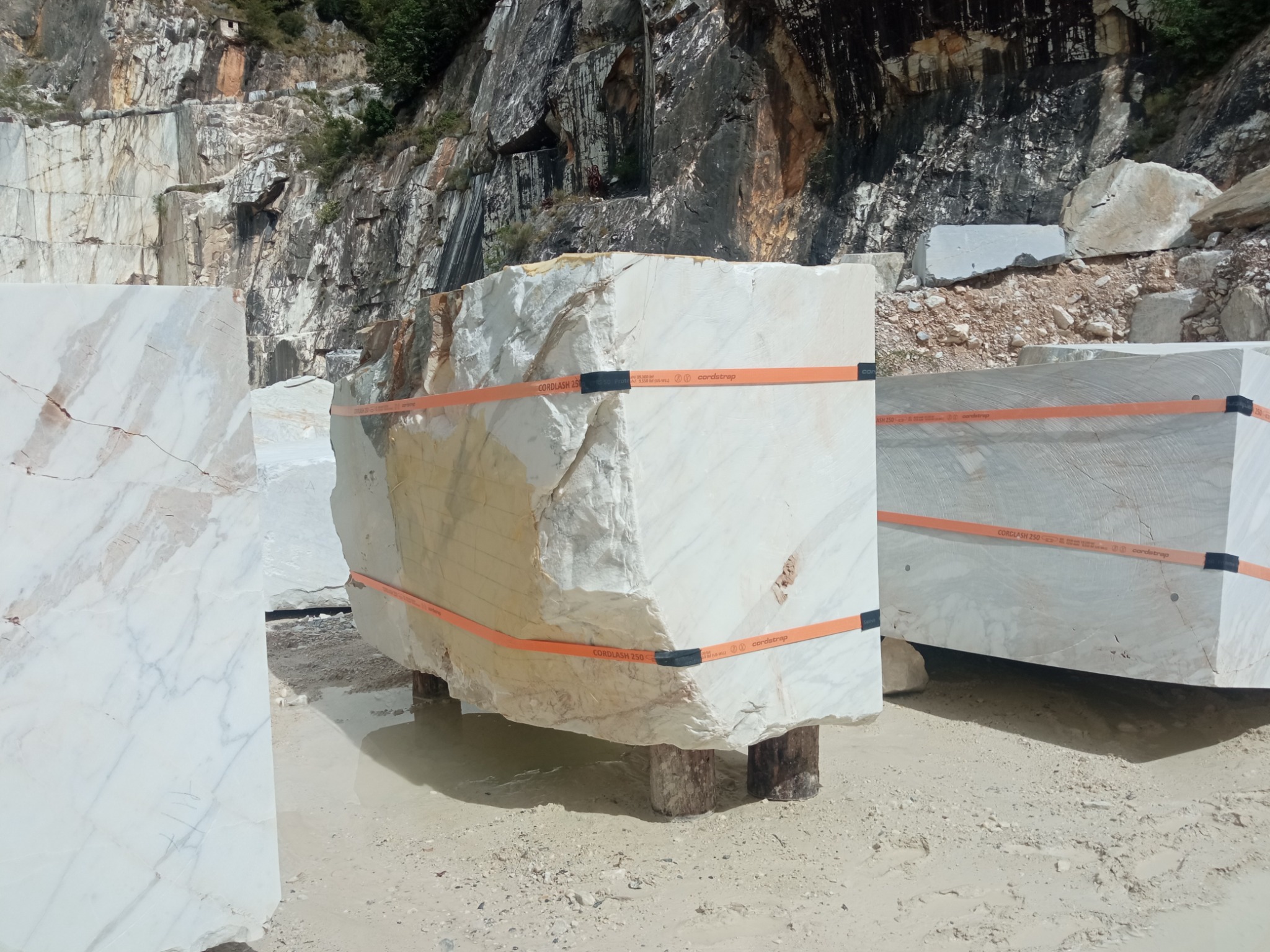
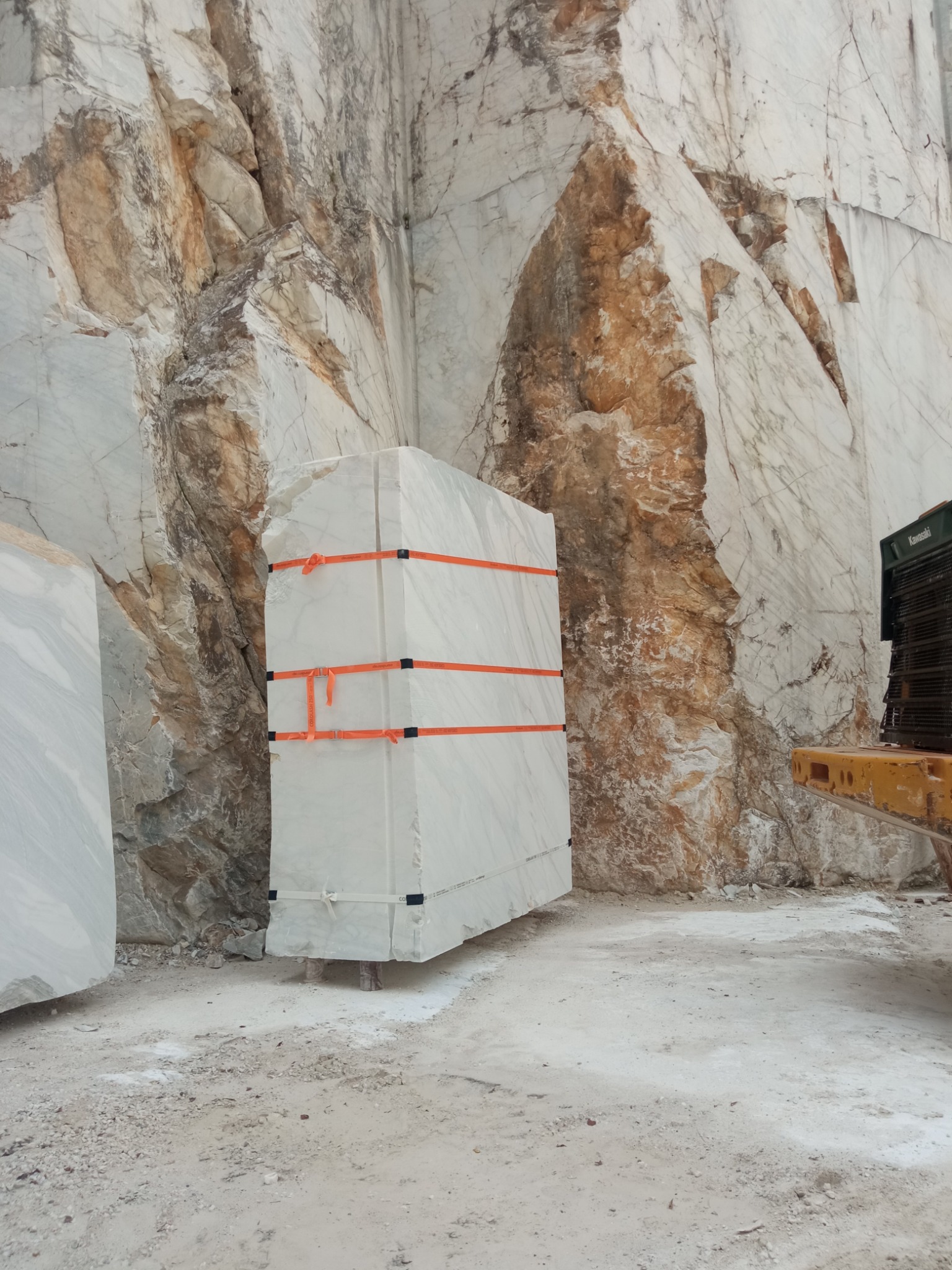
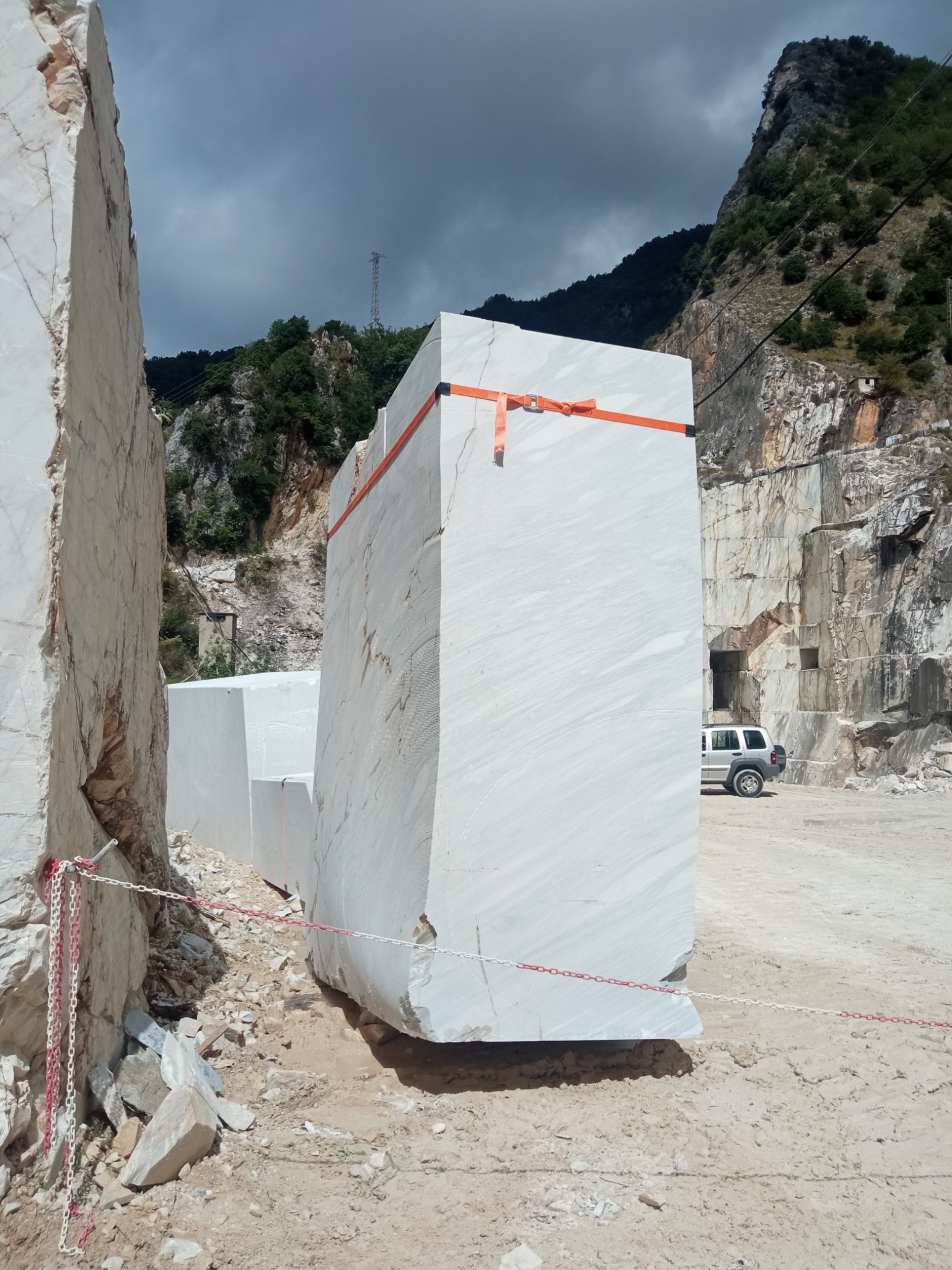
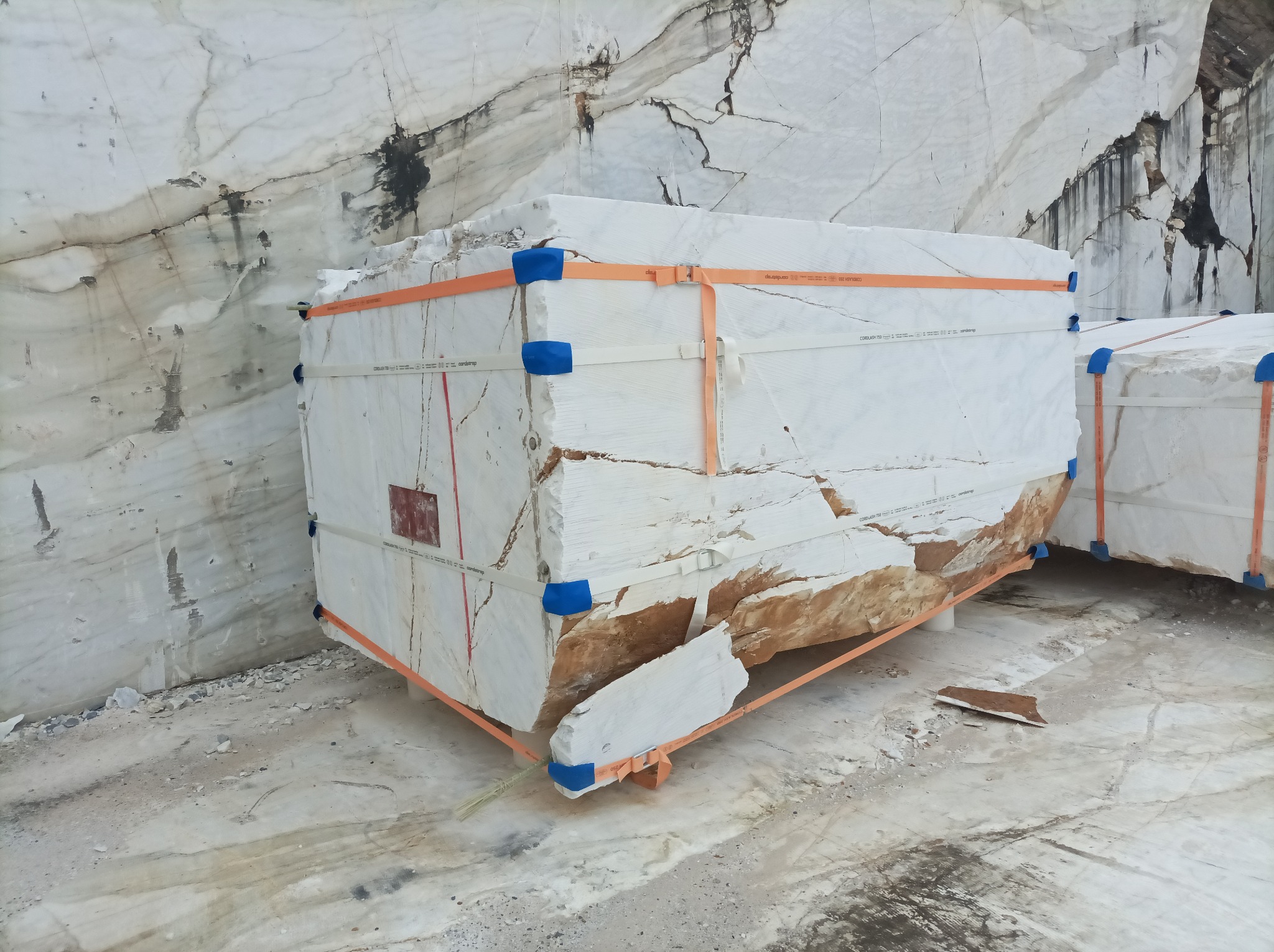
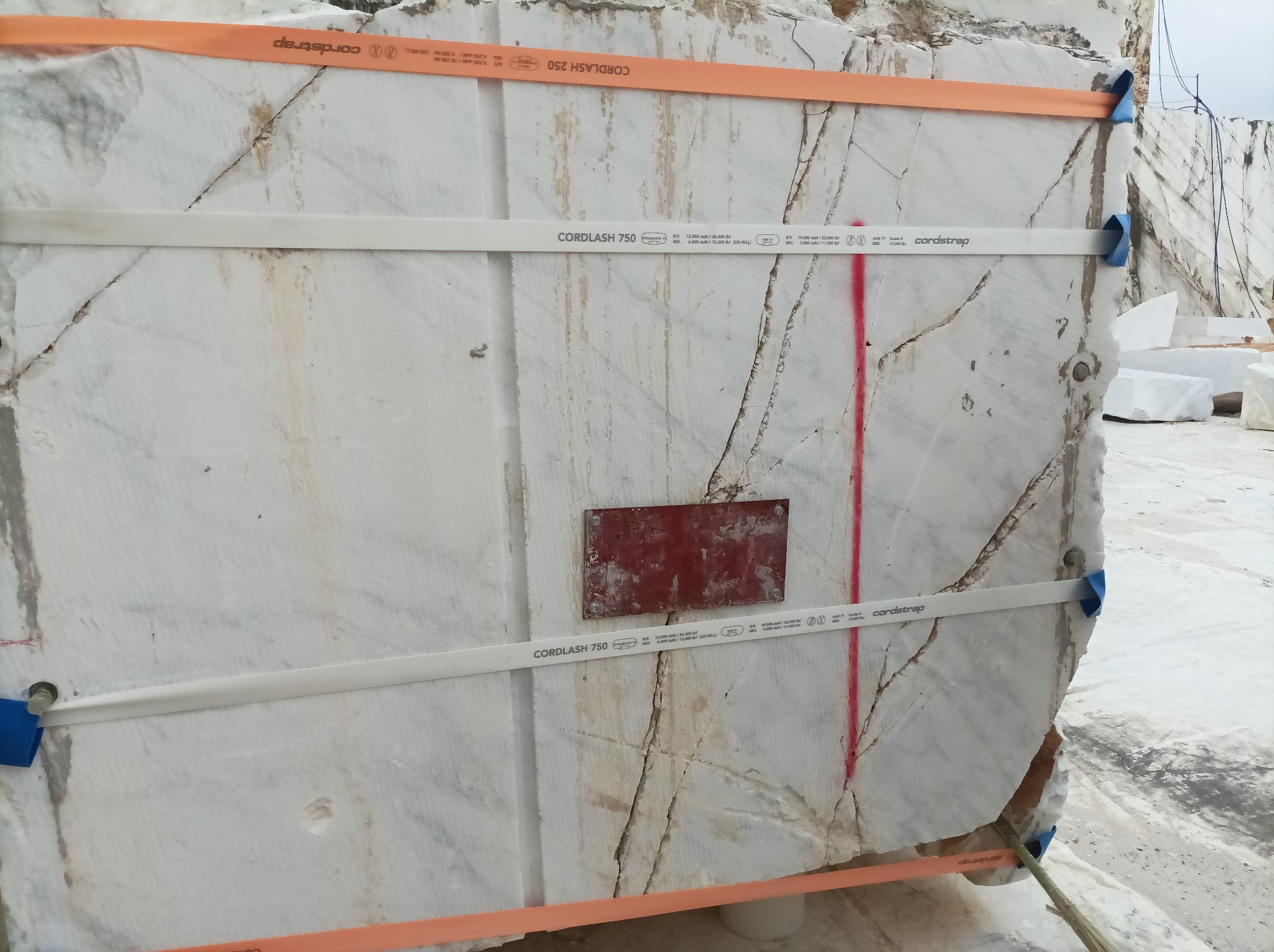
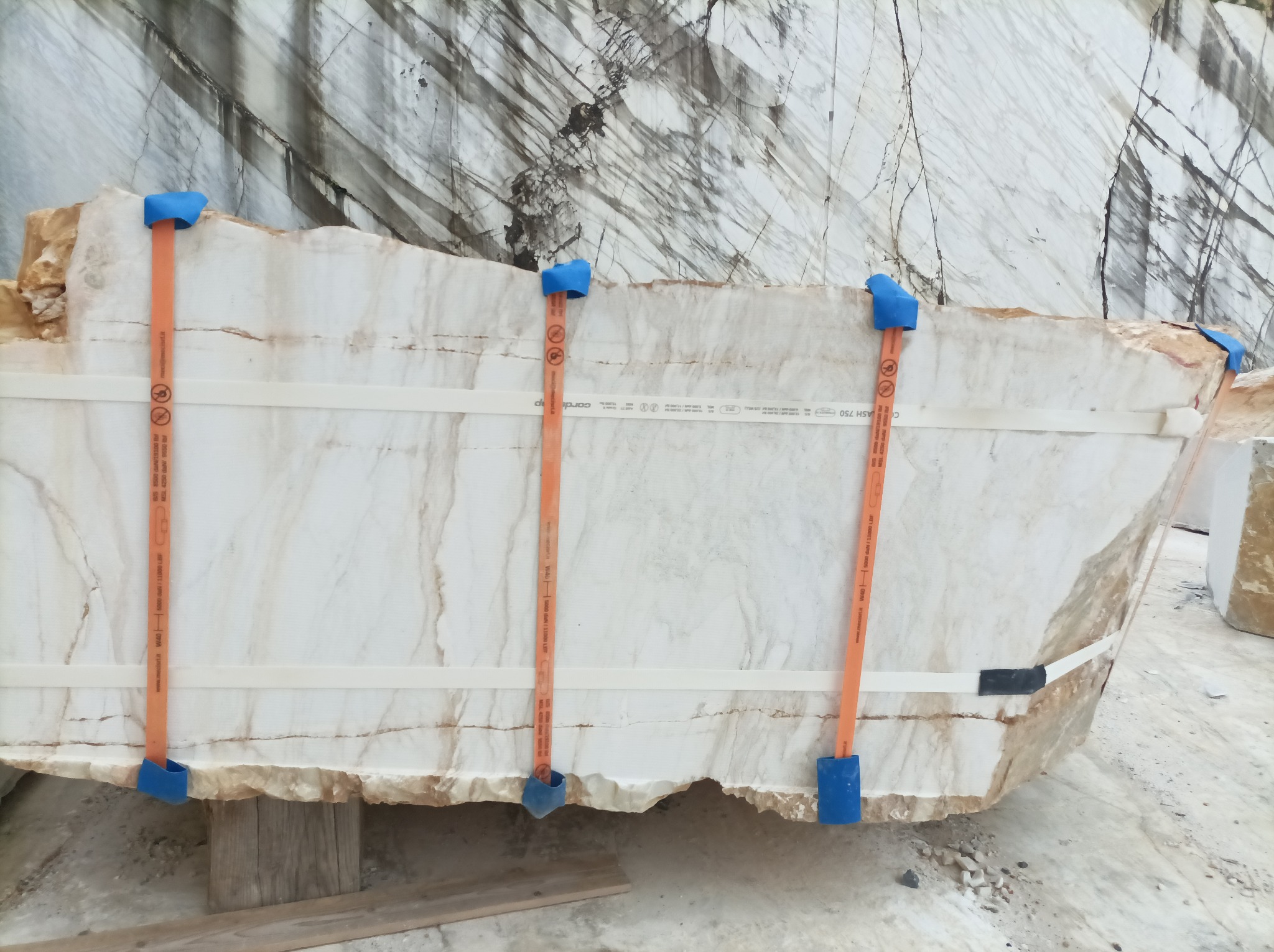
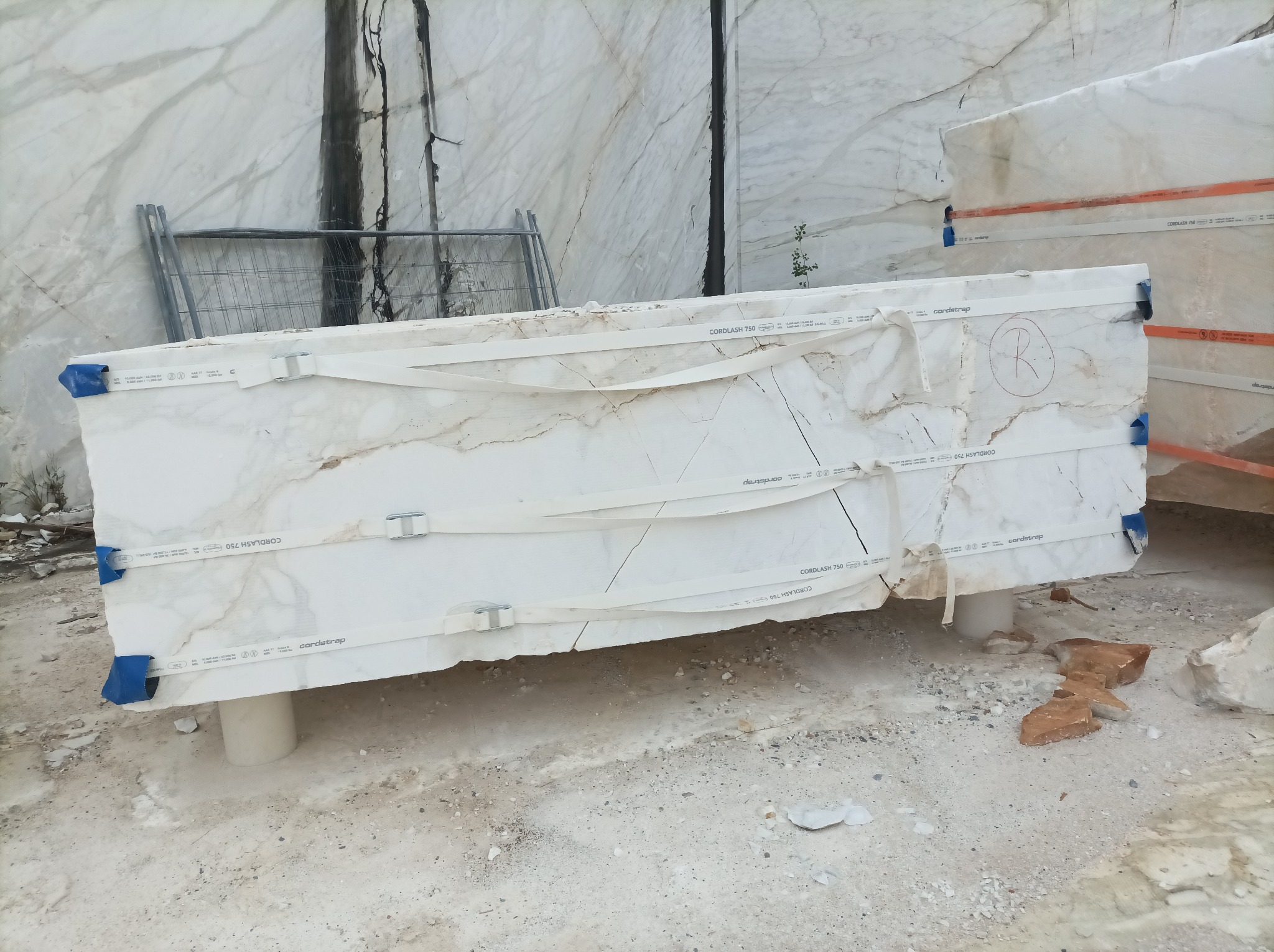
For marble blocks intended for subsequent vacuum resin treatment, reinforcing the quarry bench makes it possible to recover portions of stone that might otherwise separate along discontinuities during extraction.
In open-pit and underground quarrying, the combined use of reinforcement and containment systems can achieve recovery rates of 95–100%, depending on the marble properties, fracturing and operating conditions.
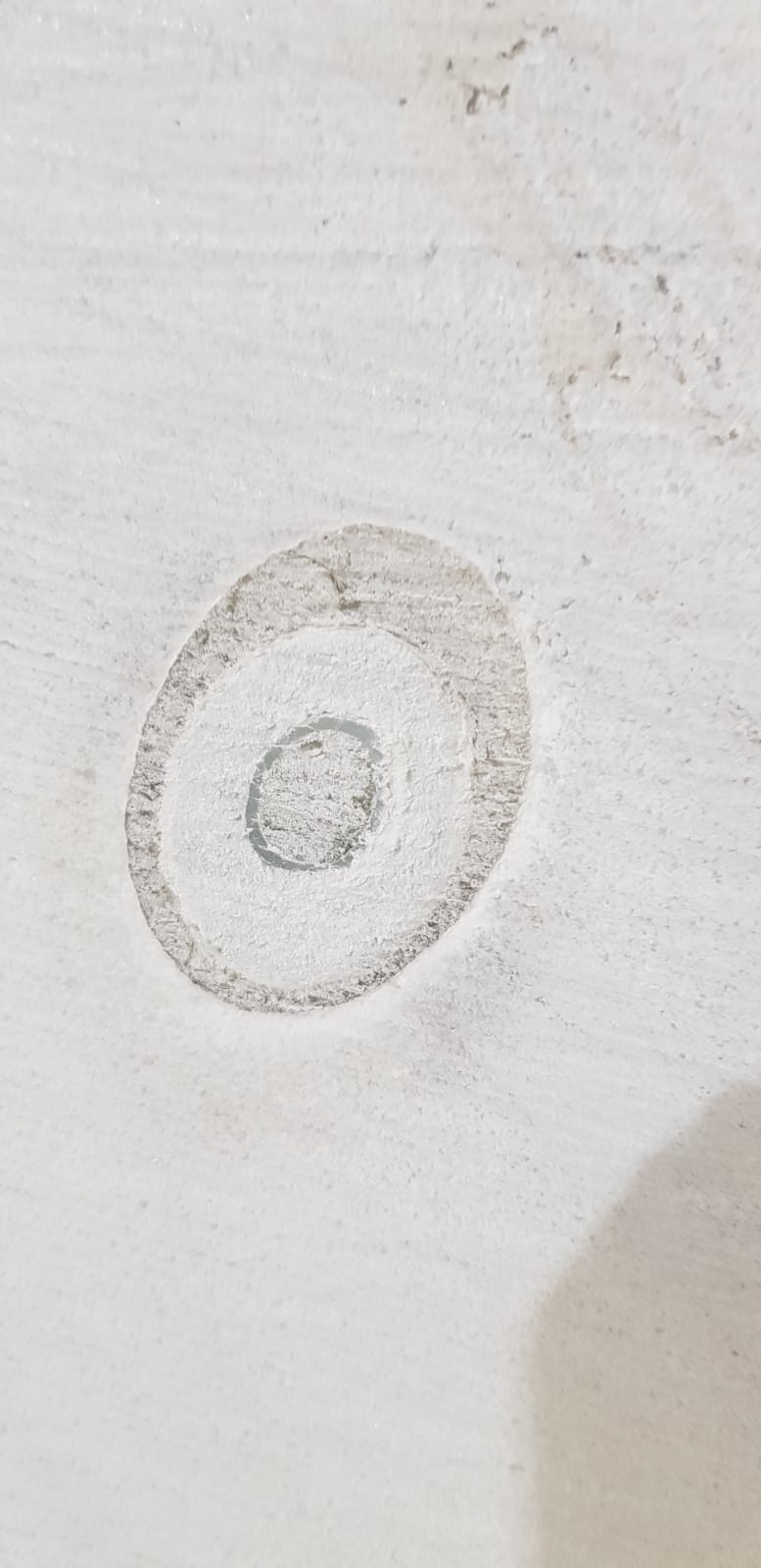
The solutions include fibreglass nails and inserts, fibreglass mats bonded with epoxy resin and containment straps. The type and arrangement of reinforcement are determined by the discontinuities and the cutting and handling stages.
As alternatives to mats, timber boards bonded with epoxy resin or metal plates secured with self-tapping screws, including MULTI-MONTI screws, can be used.
Marmotest was the first to introduce fibreglass nails and fibreglass inserts to hold together portions of marble separated by discontinuities or hairline fractures ("peli") in underground quarrying, contributing to the development of techniques aimed at recovering almost all the marble.
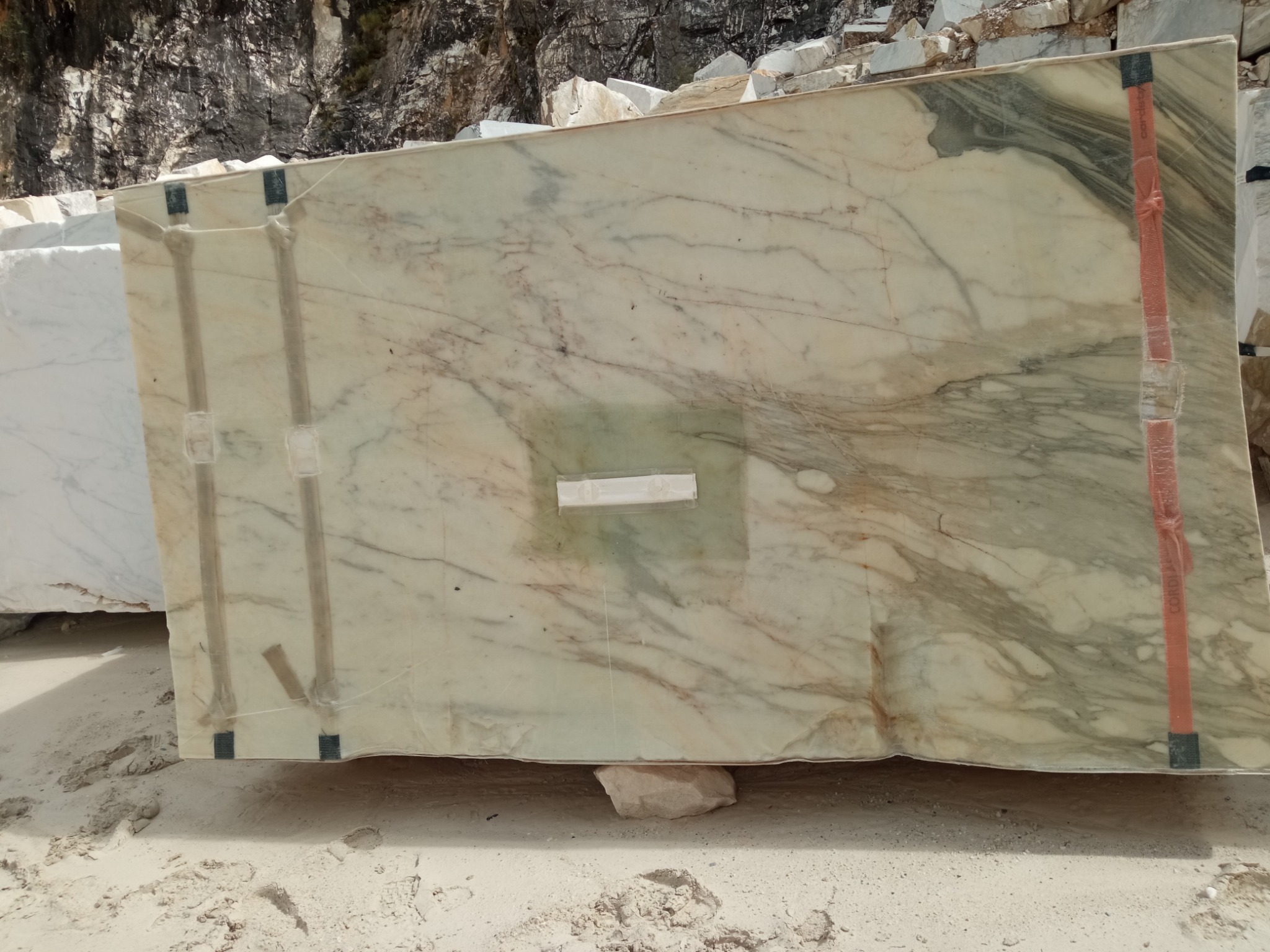
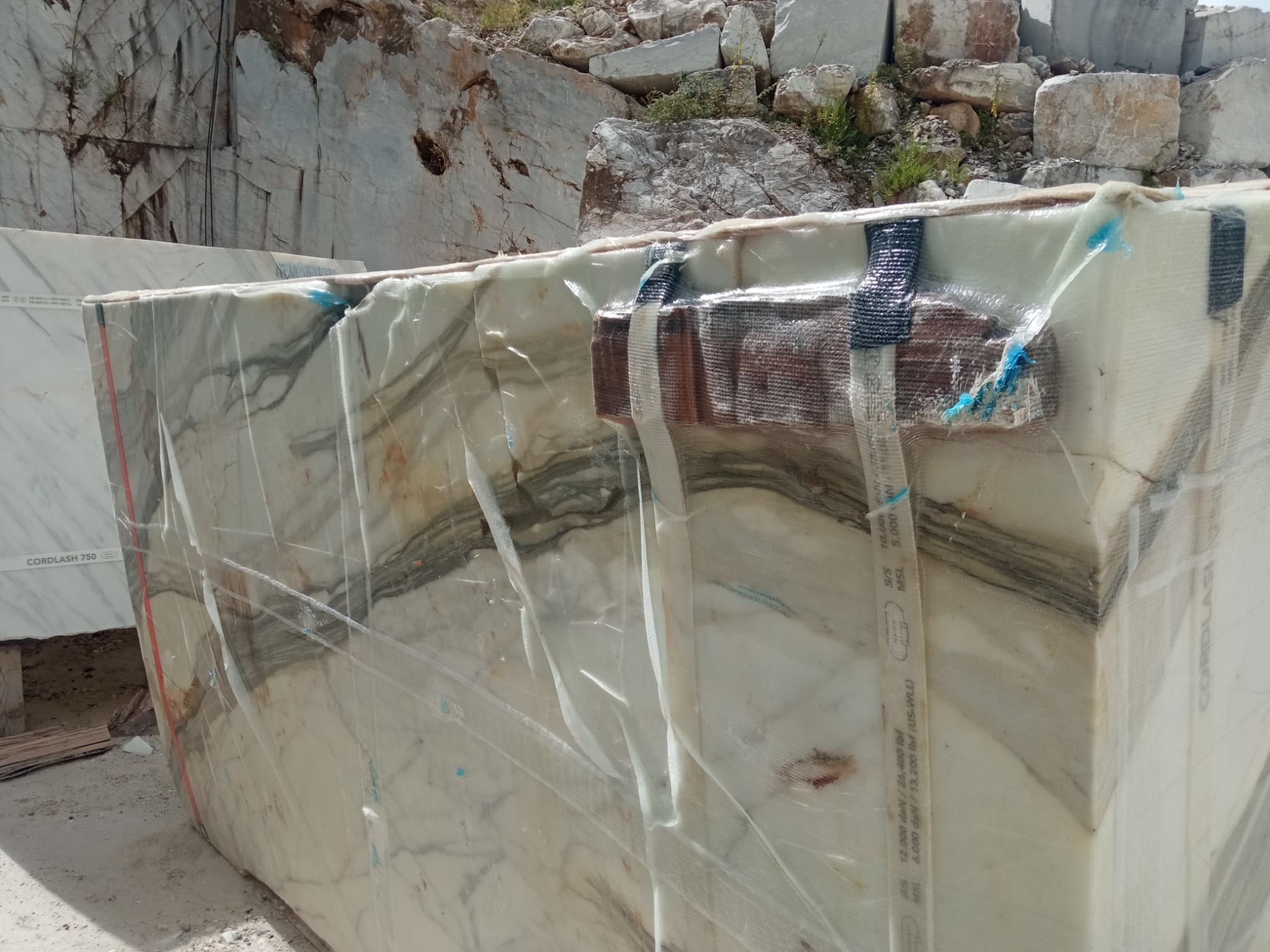
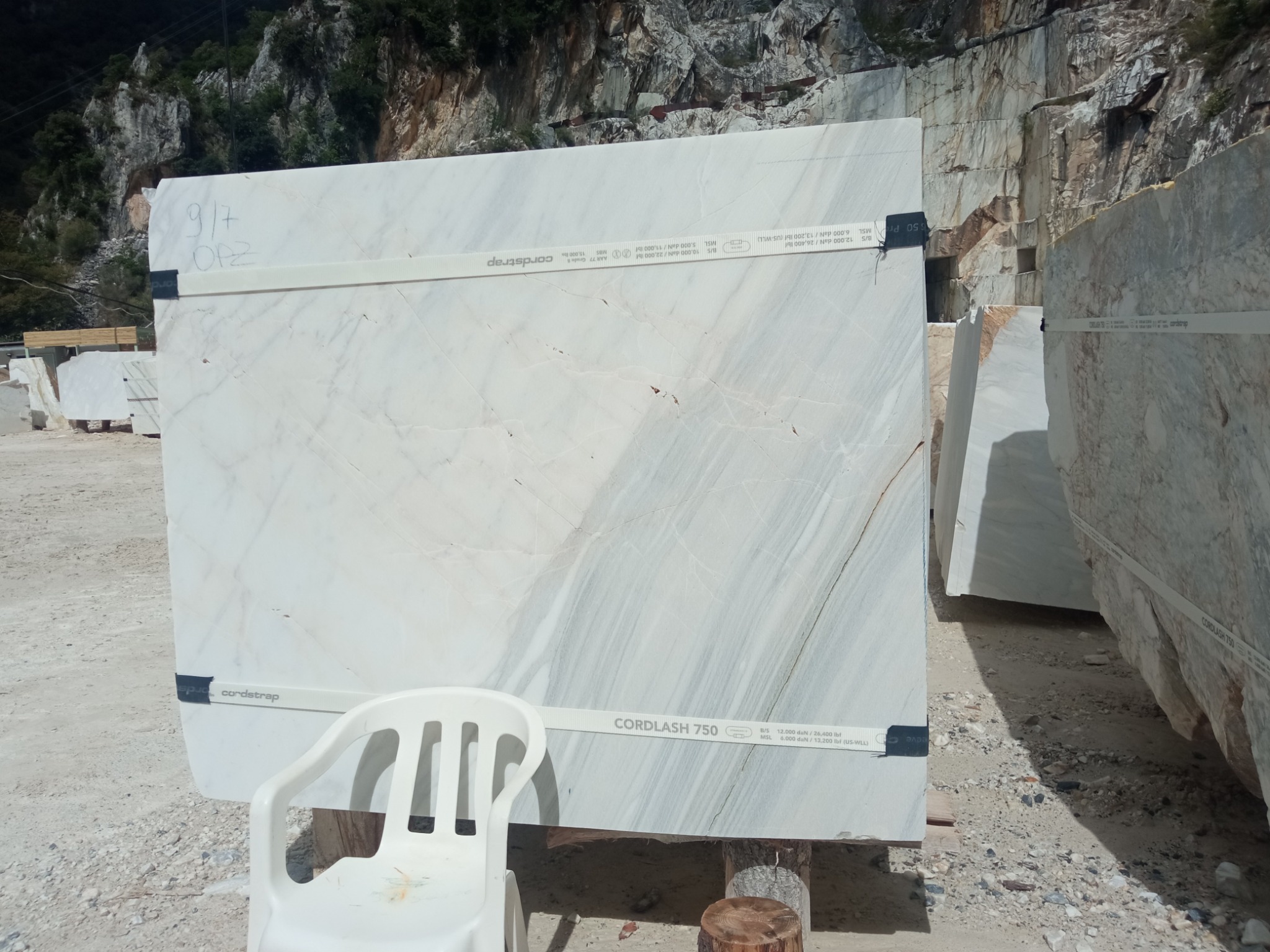
The latest development in quarry bench reinforcement techniques is the use of pretensioned containment straps. Approximately 6 mmthick, they can be inserted into the cut made by the saw, including diamond chain saws, and fitted before moving the cut block.
The straps are pretensioned to 3 tonnes using a pneumatic tensioner or a battery-powered electromechanical tensioner. They can remain around the block during vacuum resin treatment; afterwards, the steel buckle can be removed with an angle grinder.
The system uses certified straps and fastening components and also provides containment during the transport of blocks with potentially detachable portions. A hairline discontinuity in the marble can delimit a portion that appears attached to the block but could separate and fall during handling or transport. The straps help retain these portions, preserving them for subsequent processing.

Marmotest provides support in selecting the most suitable reinforcement and extraction method, including remotely through photographs and quarry documentation. The aim is to maximise stone recovery, up to 100% where conditions allow, using certified and tested products.