Marmotest CarraraASTM Organizational Member
Stone applications · Further reading

Selecting and using natural stone

Physical and mechanical properties help assess stone for its intended use. This page briefly explains each property; tables open without leaving the page.

How to interpret the values. Ranges for stone families provide guidance for comparison but are not universal suitability limits. Selecting a supply requires representative test results for the proposed stone and an assessment of installation and service conditions. Reference: CEN/TR 17024.

Water and stone structure

EN 1936

Apparent density

Mass per unit volume, including pores. It helps estimate the weight of elements and compare materials, but does not alone establish suitability for an application.

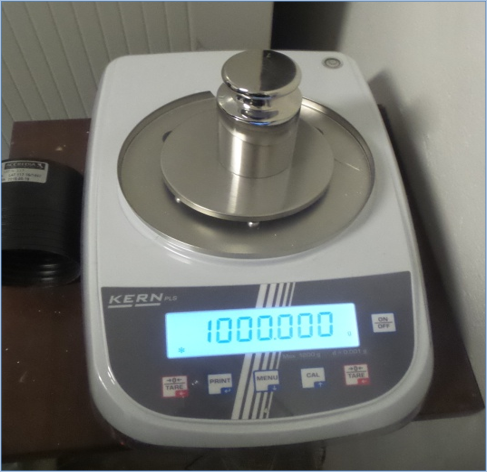
Bilancia Kern del laboratorio Marmotest con massa campione
Marmotest balance with 0.001 g resolution, calibrated annually by an accredited laboratory.
EN 1936

Open porosity

The proportion of pores connected to the exterior. It helps interpret stone behaviour when exposed to water and other external agents.

EN 13755

Water absorption

The amount of water stone can absorb relative to its dry mass. It must be considered alongside porosity, finish, exposure and installation conditions.

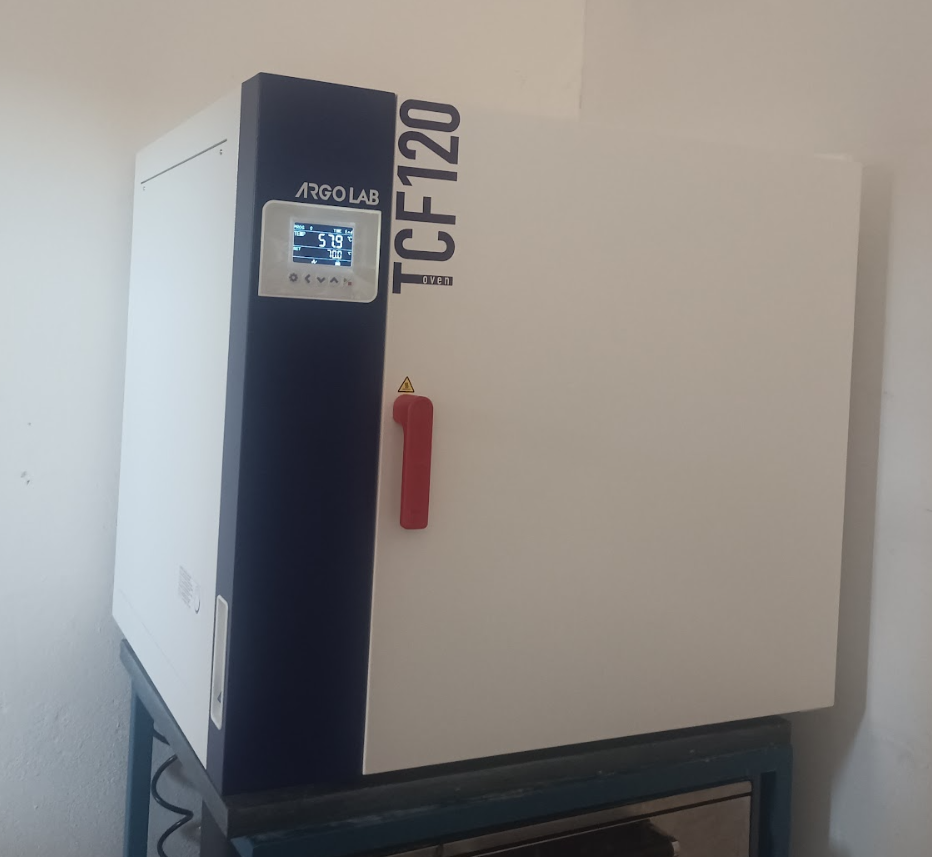
Forno da laboratorio Argolab CF120 di Marmotest
Marmotest oven: drying specimens before determining water absorption.

Use, wear and safety

EN 14158

Impact resistance

Assessment of response to impact. Particularly useful for paving and elements exposed to impacts during use.

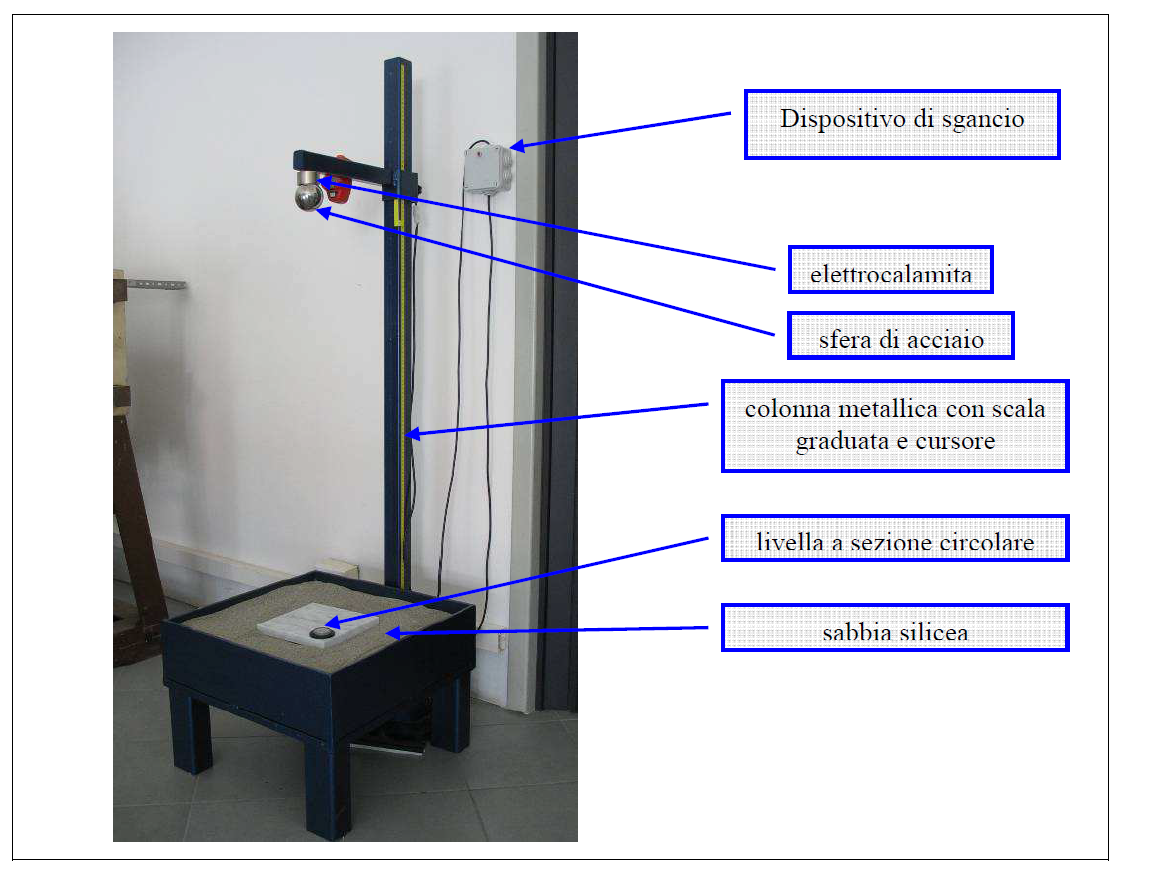
Attrezzatura Marmotest per la prova di resistenza all’urto con sfera d’acciaio e dispositivo di sgancio
Marmotest apparatus for impact resistance testing.
EN 14231

Slip resistance

Surface finish and the presence of water affect pedestrian safety. Test results must be related to actual conditions of use.

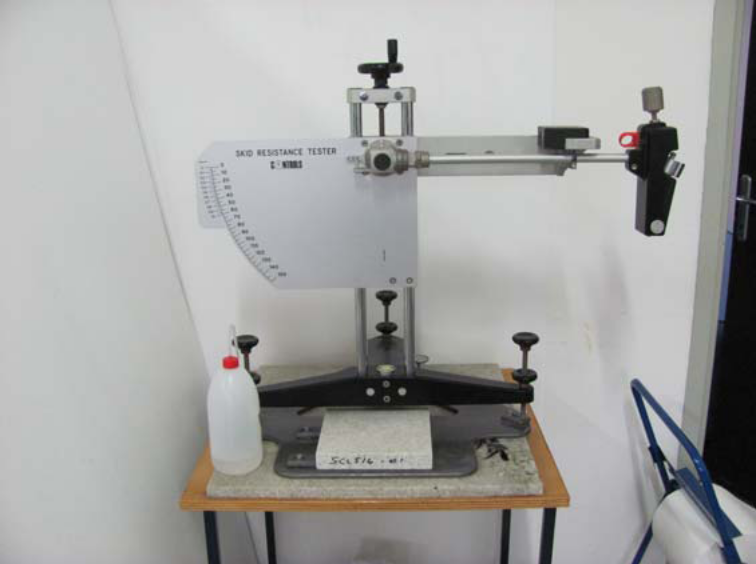
Pendolo per la prova di resistenza allo scivolamento del laboratorio Marmotest
Marmotest pendulum for slip resistance testing.
UNI EN 14157

TEST CAPON

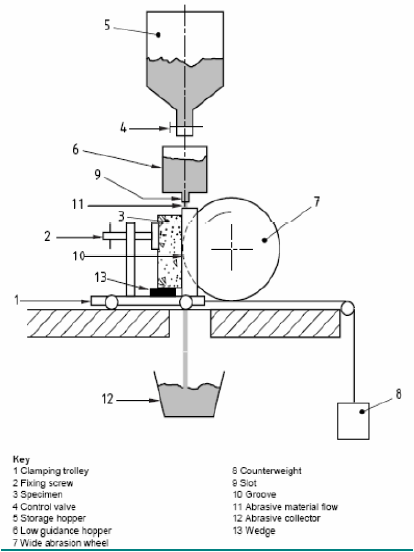
Wide wheel abrasion test. The wear is determined as the width of the groove in the specimen, expressed in mm. A lower value indicates higher abrasion resistance.

Wide wheel abrasion machine diagram
Wide wheel abrasion machine. Image from MarmoTest, Abrasion Value: A Reference Guide.
ASTM C1353/C1353M

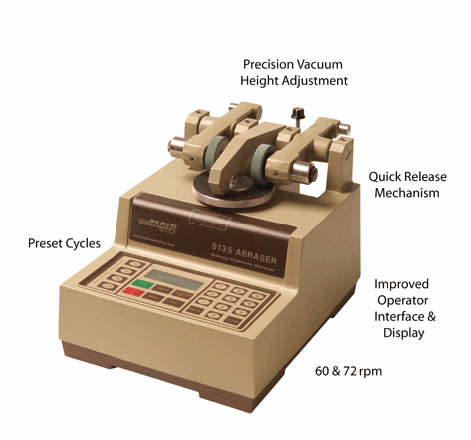
TEST TABER

Rotary platform abraser. The Taber abrasion index is used to compare abrasion resistance; a higher index indicates higher resistance. It is not directly comparable with Capon results in mm.

Taber rotary platform abraser
Taber abraser. Image from MarmoTest, Abrasion Value: A Reference Guide.

Outdoor exposure

EN 12371

Frost resistance

For exterior elements, response to freeze–thaw cycles is assessed, also taking the configuration of the installation into account.

Wet environments
Selecting stone for pools, tanks, showers and other environments with continuous exposure to water requires a dedicated assessment. Separate further reading on UNI/TS 11881.
EN 1936

Apparent density

Source of values: table from CEN/TR 17024 provided by Marmotest.

Apparent density
kg/m³
(EN 1936)
Compact Limestone>2 500
Other Limestone<2 500
Sandstone1900 to 2700
Slate – Shale – Schist2600 to 3000
Marble2600 to 2900
Gneiss2400 to 2700
Granite2400 to 3000
Basalt2550 to 3000

Guidance values: verify the characteristics of the specific stone and its conditions of use.

EN 1936

Open porosity

Source of values: table from CEN/TR 17024 provided by Marmotest.

Open porosity
vol.%
(EN 1936)
Compact Limestone0,3 to 2
Other Limestone2 to 48
Sandstone0,4 to 25
Slate – Shale – Schist0,1 to 6
Marble0,1 to 2
Gneiss0,1 to 2
Granite0,1 to 2
Basalt0,1 to 6

Guidance values: verify the characteristics of the specific stone and its conditions of use.

EN 13755

Water absorption

Source of values: table from CEN/TR 17024 provided by Marmotest.

Water absorption
% (percentage of mass)
(EN 13755)
Compact Limestone0,1 to 0,8
Other Limestone0,8 to 21
Sandstone2 to 11
Slate – Shale – Schist< 0,1 to 2
Marble< 0,1 to 0,7
Gneiss< 0,1 to 0,8
Granite< 0,1 to 0,8
Basalt< 0,1 to 2,5

Guidance values: verify the characteristics of the specific stone and its conditions of use.

EN 14158

Impact resistance

Source of values: table from CEN/TR 17024 provided by Marmotest.

Class of useMinimum fall height before rupture cm [Joule]
Private house
All the rooms of private residences
NOTE In this category are floor areas in frequent use, directly accessible from outside
30 [3,0 J]
Moderate collettive use
Entrance halls of apartment blocks with less than 30 apartments Shared areas of office buildings with less than 50 employees, medium-sized business premise
45 [4,4 J]
Intensive collettive use
Busy halls in railway stations, airports, shopping-arcades, etc. Entrance halls of apartment blocks of more than 30 apartments Shared areas of office buildings with more than 50 employees Supermarkets, wholesales premises, etc
60 [5,9 J]

Guidance values: verify the characteristics of the specific stone and its conditions of use.

EN 14231

Slip resistance

Source of values: table from CEN/TR 17024 provided by Marmotest.

SRT value
(according to EN 14231)
Risk of slip
<25High
25 < SRT < 35Moderate
35 < SRT < 65Low
>65Minimal

Guidance values: verify the characteristics of the specific stone and its conditions of use.

UNI EN 14157

TEST CAPON

Test method: UNI EN 14157:2017, Natural stone test methods – Determination of the abrasion resistance.

1 · CEN/TR 17024 guidance table

Source: CEN/TR 17024 table supplied in the Marmotest Word document. The values are guidance, not EN 14157 test-method limits.

UseExamplesRecommendations: maximum abrasion mmRecommendations: maximum abrasion mm
UseExamplesBelgiumFrance
Private houseAll the rooms of private residences NOTE In this category are floor areas in frequent use, directly accessible from outside.4242
Moderate collective useEntrance halls of apartment blocks with less than 30 apartments Shared areas of office buildings with less than 50 employees, medium-sized business premises3532
Intensive collective useBusy halls in railway stations, airports, shopping-arcades, etc. Entrance halls of apartment blocks of more than 30 apartments Shared areas of office buildings with more than 50 employees Supermarkets, wholesales premises, etc.2422

2 · BRE Information Paper IP 10/00

T. J. S. Yates and D. Richardson, Flooring, paving and setts: requirements for safety in use, BRE, Information Paper IP 10/00, March 2000. Table as reproduced in MarmoTest, Abrasion Value: A Reference Guide (2014).

Class of useNumber of pedestriansNumber of journey across floor each dayNumber of days per yearService life expectancy without significant (years)Approx total of pedestrian journeysAbrasion value (mm)
Intensive
(eg, airport shopping mall)
70,000 +1350 +20500,000,000< 23 mm
Medium
(eg office buildings)
5002250205,000,000Between 23 and 30
Low
(eg individual residence)
44350 +1050,000>30 mm

3 · I-STONE

I-STONE project, Handbook for proper selection of stone to each application and climate, Deliverable 5.28, Rev. 1, October 2008, section 6.3.2. No individual authors are identified in the source. Table as reproduced in the MarmoTest guide.

Class of UseExampleAbrasion value (mm)
Intensive– public halls in stations, airports, shopping centres;
– halls in an apartment block with more than 30 housing units;
– common rooms of an office building with more than 50 employees;
– floorings in supermarkets, etc
≤ 24 mm
Moderate– common rooms of multifamily houses (with max. 30 housing units);
– common rooms of block offices (max. 50 employees);
– rooms with moderate commercial use.
Between 24 mm and 35 mm
Individualall rooms in private housing units.
note: in this category, the areas most susceptible to wear are the ones which are directly accessible from outside.
≤ 42 mm

These are source-specific guidance values, not limits prescribed by EN 14157.

Guidance values: verify the specific stone and conditions of use.

ASTM C1353/C1353M

TEST TABER

Test method: ASTM C1353/C1353M-20e1, Standard Test Method for Abrasion Resistance of Dimension Stone Subjected to Foot Traffic Using a Rotary Platform Abraser.

1 · David West

David West, seminar Stone in Modern Building – Paving, as cited in MarmoTest, Abrasion Value: A Reference Guide (2014). Publication date and proceedings are not specified in the supplied document.

Taber abrasion indexAppropriate uses
> 20-25All uses; high abrasion resistance
15 – 20Moderately high abrasion resistance; suitable for most uses, including high traffic prestige commercial flooring
12 – 15Moderate abrasion resistance; suitable for all but high traffic prestige commercial flooring
8 – 12Moderately low abrasion resistance; suitable only for light commercial or domestic flooring situations
< 8Low abrasion resistance; suitable only for domestic or light external traffic situation

2 · CSIRO

A. H. Spry, Selective Guide to the Specification of Dimension Stone, CSIRO, as cited in MarmoTest, Abrasion Value: A Reference Guide (2014). Publication details are not specified in the supplied document.

Proposed usedMinimum Taber index value
Light duty, domestic8
Medium duty, light commercial12
Heavy duty15

These are guidance values attributed to the cited authors, not limits prescribed by ASTM C1353. The 2014 MarmoTest guide refers to an earlier ASTM edition; the active edition determines volume loss.

Guidance values: verify the specific stone and conditions of use.

EN 12371

Frost resistance

Source of values: table from CEN/TR 17024 provided by Marmotest.

Exterior useNumber of cycles according to EN 12371
Paving elements – flooring140
Elements in contact with the floor140
Non-vertical elements in elevation or elements that stick out the facade84
Massive masonry elements70
Thin cladding elements on ventilated facades14

Guidance values: verify the characteristics of the specific stone and its conditions of use.